
Yes. Preventive HVAC maintenance before summer is a practical necessity in Savannah, not just a precaution.
Our cooling season starts early and runs long. Summer heat can arrive in force by late April, and residential systems often run with little rest until October. After months of limited winter use, your HVAC has likely built up dust, moisture residue, and component wear that you cannot yet see or feel. But that will show up the moment your system faces its first heavy load.
AAction Air Conditioning & Heating Co. has been helping Savannah-area homeowners stay comfortable since 1999. As a Bryant Factory Authorized Dealer, we work exclusively with proven equipment and bring the same level of care to every maintenance visit. Savannah’s climate; high humidity, coastal salt air, and an extended cooling season, creates system stress that most parts of the country do not experience. A spring inspection catches problems while they are still minor and positions your system to handle months of continuous demand.
Why Preventive HVAC Maintenance Matters Before Savannah’s Summer
Our climate does not ease your system into the cooling season gradually. Temperatures shift from mild spring conditions to intense heat within a few weeks. Your AC moves from minimal use to near-constant operation almost overnight.
The longer the cooling season, the more wear your system accumulates. In Savannah, residential air conditioners typically run from April through October, far longer than in northern states. Any issue left unresolved after winter becomes a liability once demand peaks.
According to the U.S. Energy Information Administration, air conditioning accounts for approximately 19% of electricity consumption in U.S. homes. In the hot-humid Southeast, that share is higher. A clean filter alone can reduce your air conditioner’s energy use, just one task in a full seasonal tune-up. Across Savannah’s long cooling season, that efficiency gain adds up on every monthly bill.
Here is how local conditions affect residential HVAC systems:
| Savannah Climate Factor | Impact on HVAC System |
| Elevated humidity (76% annual avg.; 77–80% Jun–Sep) | Boosts condensate production; frequent drain clogs |
| Extended cooling period (Apr–Oct highs >78°F) | Accelerates compressor/blower motor fatigue |
| Proximity to coastal salt spray | Speeds condenser coil fin corrosion |
| Sharp spring temp shifts (50–78°F Mar–Apr) | Strains capacitors/contactor electrical parts |
| Mild winter inactivity (lows >40°F) | Allows undetected refrigerant leaks, coil dust, capacitor wear |
What Happens During an HVAC System Inspection in Savannah?
A professional HVAC system inspection in Savannah is a structured, multi-point diagnostic, not a quick check. Our NATE-certified technicians work through every major system component to identify problems before they turn into failures. Here is what that process covers.
Electrical Components and Capacitor Assessment
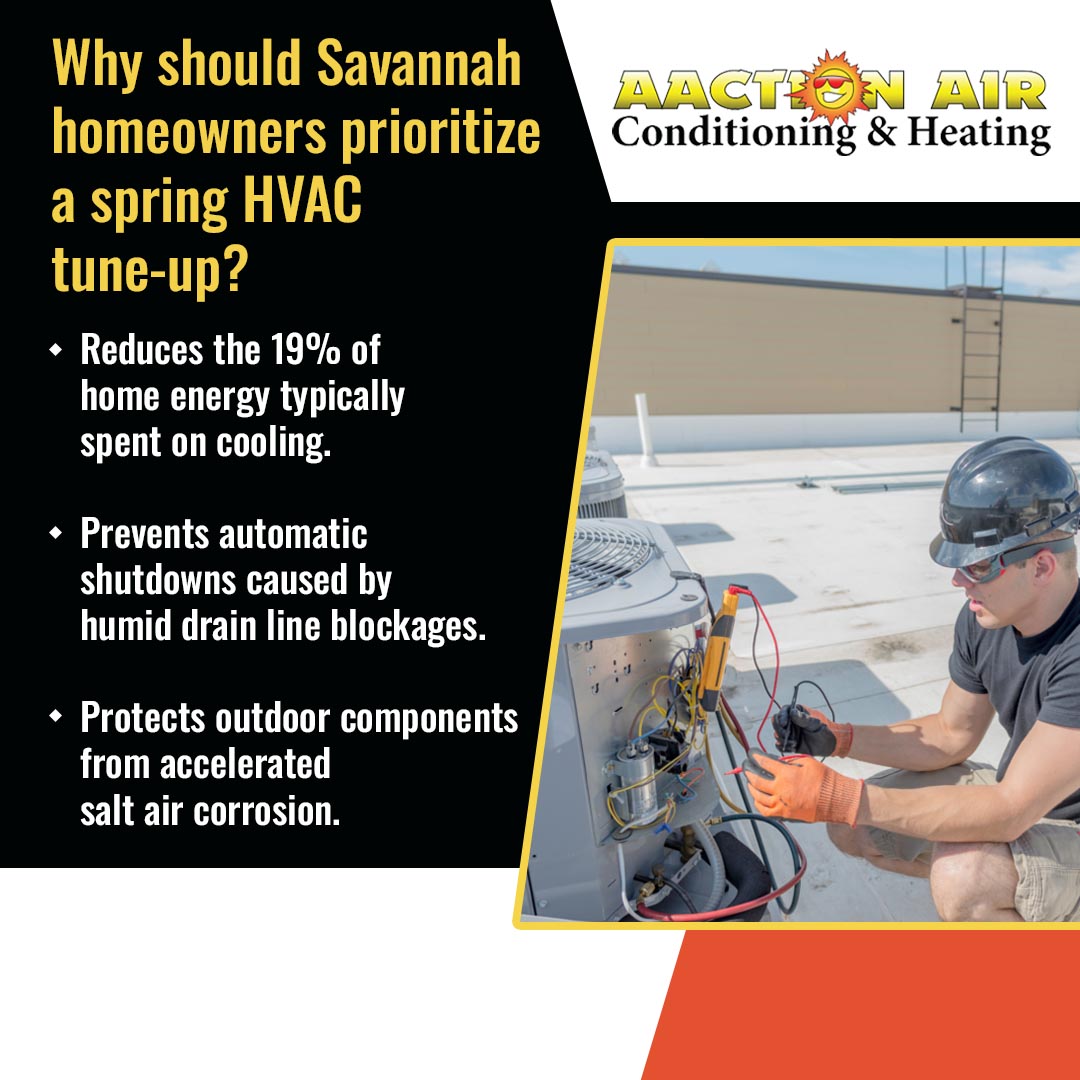
Our technicians measure and assess starting and run capacitors, report contactor condition, check all wire connections, and measure amp draw and line voltage to the air handler and condenser. Capacitors are among the most common early-summer failure points. They rarely show obvious symptoms before they fail. A capacitor already weakened by heat cycles will often give out under the surge of the first hot days of the season. Catching it during a spring visit can cost less than an after-hours emergency call in July.
Refrigerant, Coil Condition, and Leak Check
We record refrigerant pressure and temperature readings to confirm your system is operating within its proper range. We also check for refrigerant leaks, inspect refrigerant controls, and assess the condition of both the indoor coil and the outdoor condenser. A system running low on refrigerant loses cooling capacity before any obvious breakdown occurs; you feel it as rooms that never quite cool down. We rinse the condenser coil with water as part of our service visit to clear buildup that reduces heat transfer efficiency.
Drain Line Service and Moisture Control
Our technicians clean the primary condensate drain line and check that it is correctly pitched for proper drainage. In Savannah’s humid climate, algae and debris build up inside drain lines far faster than in drier regions. A blocked drain causes most modern systems to shut off automatically to protect against water damage, leaving you without cooling on a hot afternoon. Regular drain line service keeps that from happening.
Airflow, Filter, Thermostat, and Duct Check
We replace your customer-supplied filter, inspect duct connections, confirm thermostat calibration, and measure the delta T, the temperature difference between supply and return air. That reading tells us whether your system is moving and conditioning air the way it should. A miscalibrated thermostat or a restricted filter quietly forces every other component to overwork across the full cooling season.
Does Seasonal HVAC Maintenance Reduce Emergency Breakdowns?
Yes, and the pattern repeats every summer.
Most warm-season HVAC failures trace back to problems that developed slowly and went undetected. Seasonal HVAC maintenance in Savannah finds and addresses those problems before the season begins, when the fix is still manageable, and parts are readily available.
Three failure types are especially common in our area:
Capacitor failure is one of the most common causes of early-summer breakdowns. The first run of 85-degree days puts sudden, heavy demand on systems that have been mostly idle since fall. A capacitor already degraded by age and heat is likely to fail under that first surge. Our technicians measure and report both starting and run capacitor readings during each scheduled inspection.
Blocked drain lines shut systems down more often than most homeowners expect. Algae grows quickly in our humid conditions. Once a drain line backs up, the system stops running to prevent water from damaging your home, a fully avoidable outcome when drain line service is part of your spring maintenance.
Loose electrical connections develop gradually from vibration and the repeated heating and cooling of metal components over time. Connections that were borderline at the end of last season can fail once the system starts running hard again. We check all wire connections and address any issues found during each scheduled inspection.
The DOE’s Office of Energy Efficiency and Renewable Energy says that according to research, 70 to 90% of residential heating and cooling systems carry at least one energy-wasting fault. These faults do not correct themselves. Catching them early keeps repairs minor.
How Savannah’s Coastal Climate Increases System Stress
Savannah’s geography creates HVAC demands that homeowners in drier or cooler climates do not face. Two factors stand out above the rest.
The first is sustained humidity. With an average annual relative humidity of 72% and summer months regularly hitting 78 to 80%, your evaporator coil manages condensate output continuously throughout the season. When maintenance is skipped, that persistent moisture inside the air handler creates conditions where mold and mildew can take hold. The effect shows up in both indoor air quality and system performance.
The second is salt air. Homeowners on and near Savannah’s barrier islands, Tybee Island, Whitemarsh Island, and Talahi Island, deal with airborne salt that gradually settles on condenser coil fins and copper components. Over time, this causes corrosion that reduces heat transfer efficiency well before visible damage appears. Rinsing and inspecting the condenser coil as part of our service plan visits specifically addresses this.
Communities further inland, Pooler, Richmond Hill, Port Wentworth, and Rincon, face less direct salt air exposure. Even so, they carry the full weight of Georgia’s summer humidity and a cooling season that runs longer than the national average. Homeowners across Garden City, Bloomingdale, and Georgetown face the same cumulative system stress, making consistent seasonal service just as important.
Energy Efficiency Benefits of an HVAC Tune-Up
An HVAC tune-up in Savannah before the cooling season has a direct effect on how much electricity your system uses, day after day, for months.
The U.S. Department of Energy confirms that replacing a dirty, clogged filter with a clean one can lower your air conditioner’s energy consumption. Clean coils and a properly charged system mean faster cooling cycles and less total runtime.
Across a six- to seven-month Savannah cooling season, even a modest efficiency gain compounds over hundreds of operating hours. These are real reductions on every monthly utility bill throughout the summer.
A well-serviced system also delivers:
- Consistent cooling across all rooms, with fewer hot spots
- Less wear on the compressor, blower motor, and contactors
- Better indoor air quality from a clean, unrestricted filter
- A longer overall service life with fewer unplanned repair calls
Is an HVAC Maintenance Plan Worth It in Savannah?
For most Savannah-area homeowners, a maintenance plan removes a recurring task from your schedule and builds a consistent service history for your system over time.
What Is an HVAC Maintenance Plan?
An HVAC maintenance plan in Savannah typically covers two seasonal visits per year: one ahead of the cooling season and one before heating season begins. Each visit follows the same thorough diagnostic process described above. A structured plan keeps your system operating well year-round and allows our technicians to catch small issues before they grow. You receive a renewal notice in advance, and we coordinate scheduling, so you are not left trying to remember when service is due.
What Is an HVAC Service Agreement?
An HVAC service agreement in Savannah goes beyond individual tune-up visits. It establishes an ongoing service relationship where your system’s history is tracked, reminders are handled on your behalf, and our repair warranty covers any issues for the full season. If a repair we make does not hold during that season, you are not billed for the follow-up work. Our Service Plans are available for both residential and commercial customers throughout the Savannah and Hilton Head area. Both options, a maintenance plan and a service agreement, help protect your system investment and reduce the cost of deferred repairs.
When Should You Schedule Preventive HVAC Maintenance?
The ideal window is late February through early April.
This timing puts your inspection ahead of the first serious spring heat and well before peak service demand arrives. Once temperatures stay consistently in the mid-80s, service schedules across the Savannah area fill up fast, and appointment flexibility drops.
Scheduling in early spring means:
- Your system is fully serviced before the first heat wave hits
- Any needed parts can be sourced without peak-season delays
- You can choose an appointment time that works for your household
A good rule of thumb: if it has been more than 12 months since your last professional inspection, schedule one before summer.
Warning Signs You Should Not Delay Maintenance
Call for AC repair in Savannah before your next scheduled visit if you notice any of these now:
- Weak or reduced airflow from vents throughout the home
- Musty or stale odor when the system runs
- Water or moisture near the indoor unit or air handler
- Uneven cooling with noticeable hot spots in certain rooms
- Unusual sounds, such as rattling, clicking, or buzzing, during operation
- Higher energy bills without any change in usage
Each point to an underlying problem that worsens under summer load. Catching it early keeps repairs manageable.
Frequently Asked Questions
How often should I schedule HVAC maintenance in Savannah?
Twice a year, once in spring and once in fall. Savannah’s long cooling season and high humidity put more cumulative stress on residential systems than most climates. Two visits a year keep your system performing at its best year-round and allow our technicians to catch developing problems before they become costly.
How long does a preventive maintenance visit take?
Visit duration varies based on your system type and current condition. Our NATE-certified technicians work through a thorough checklist covering electrical components, refrigerant levels, coil condition, condensate drain line, and airflow. So every item gets proper attention before the cooling season begins.
What is the difference between a maintenance visit and a repair call?
A maintenance visit is scheduled and preventive. A repair call is reactive. Preventive maintenance finds problems while they are still small. A repair call addresses a system that has already failed or stopped working correctly. Maintenance costs far less than emergency repairs and helps you avoid the discomfort of a breakdown during peak summer heat.
Does HVAC maintenance affect my system’s warranty?
For many manufacturers, yes. Most HVAC equipment warranties require documented, regular professional maintenance to remain valid. Skipping scheduled service can void warranty coverage on parts and labor. Keeping a maintenance record through a service plan protects both your equipment and your warranty standing. Check your equipment documentation or call us; we can help you understand your Bryant system’s specific maintenance requirements.
What is included in your service plan visits?
Each visit covers a full seasonal diagnostic of your heating and cooling system. Our technicians assess electrical components, including capacitors and contactors, check refrigerant levels and coil condition, service the condensate drain line, replace your customer-supplied filter, inspect duct connections, and verify proper airflow throughout the system. We schedule both seasonal visits and handle renewal reminders on your behalf.
Preparing Your HVAC System Before Savannah’s Summer Heat Arrives
Savannah’s summer builds quickly. A system that has not been serviced before the heat arrives is already working at a disadvantage, and the season is long enough that small inefficiencies add up in a real way.
Preventive maintenance done before the cooling season lowers breakdown risk, reduces energy waste, and puts your equipment in the best position to handle months of continuous demand. Scheduling early also keeps you ahead of the service rush that comes once temperatures climb across the greater Savannah area.
Call AAction Air Conditioning & Heating Co. at (912) 897-2247 or email us at james@aactionair.net when you need preventative HVAC maintenance in Savannah, GA. Schedule services by our licensed technicians and go into summer with confidence that your system is ready.